Category: Mysh Event

  • 300 Characters in Three Days: Mysh at the London Children’s Festival

    300 Characters in Three Days: Mysh at the London Children’s Festival

    There’s a particular sound a festival makes on day one. Tents going up, sound systems getting tested, volunteers comparing schedules, and underneath it all the low hum of a few thousand kids who have been waiting for this weekend since school let out.

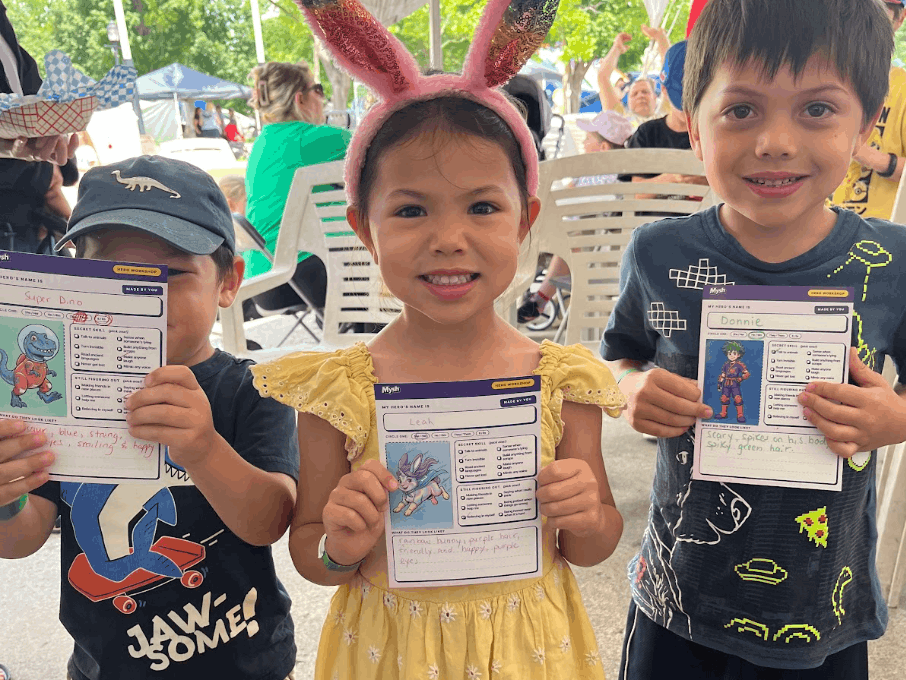
    We spent three days in that sound. Mysh set up at the London Children’s Festival from June 19 to 21, and by the time we packed down, more than 300 characters had been dreamed into existence by the kids who stopped at our table.

    Here’s what those three days looked like.

    Three hundred heroes, villains, and everything in between

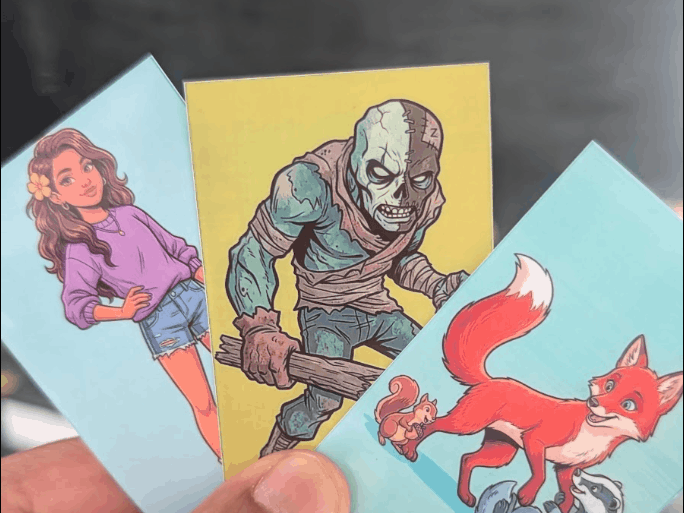
    Three hundred characters is a number we can put in a report. What it actually looked like was this: a kid deciding, in about four seconds, that their hero needed to be part dragon. A pair of siblings arguing productively about whether a sidekick should be brave or extremely cowardly (cowardly won, and it was the right call). A parent leaning over their kid’s shoulder and getting quietly pulled in, the way parents do.

    Character creation is where Mysh starts, and it’s the fastest way we know to show a kid what the game actually is. You don’t get handed a hero. You build one. And the moment they realize there’s no wrong answer — that the game will take whatever they give it and run — something clicks. The ideas stop being careful.

    Multiply that click by three hundred and you have our weekend.
    The number we actually care about

    Festivals are good at producing big front-of-house numbers. Foot traffic is easy. Attention for ninety seconds is easy. What’s hard — what every team at every booth is secretly measuring themselves against — is whether any of it survives the drive home.

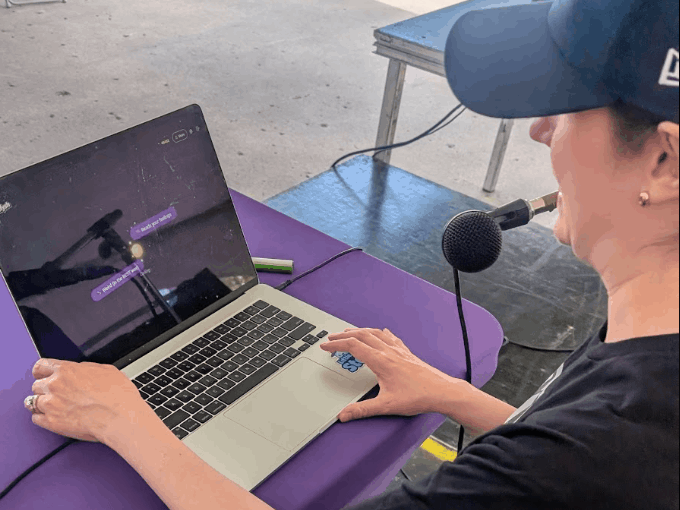
    More than 100 of the players we met in London went on to play Mysh at home.

    That’s the stat we keep coming back to. It means the game wasn’t a festival novelty sandwiched between a face-painting station and a snack line. It followed them home. It got opened again on a laptop or a tablet in a living room, on a kid’s own time, with no booth and no staff and nobody handing them a headset. They just wanted to keep going.
    An hour is a long time when you’re eight

    The other number from London that stopped us: over 100 players ran story sessions of an hour or more.

    If you’ve spent any time around this age group, you know how much that means. An hour of sustained, self-directed attention from a kid in the middle of summer, competing against every other thing a screen could be offering them, is not a small ask. Nobody sat through an hour of Mysh out of politeness.

    They stayed because the story was theirs. Every turn was a decision they made, a direction they chose, a character they’d built showing up and doing something only they could have imagined. That’s the difference between being entertained for an hour and making something for an hour — and kids can feel the difference even when they can’t name it.
    What we took home from London

    Three days. Three hundred-plus characters. A hundred-plus families who kept playing after the tents came down, and a hundred-plus players who gave us an hour or more of the good stuffm the focused, inventive, arguing-about-sidekicks kind of attention.

    We came to London to show kids what Mysh is. Mostly, they showed us. Thanks to the London Children’s Festival for having us, to every parent who let their kid take one more turn, and to three hundred brand-new characters now out there somewhere, waiting for their next story.
  • Stories Under the Tree: Our Canada Day in Cambridge

    Stories Under the Tree: Our Canada Day in Cambridge

    Some events you plan down to the minute. Others plan themselves around you. This year’s Canada Day in Cambridge was firmly the second kind, and it turned out to be one of the best afternoons we’ve had all summer.

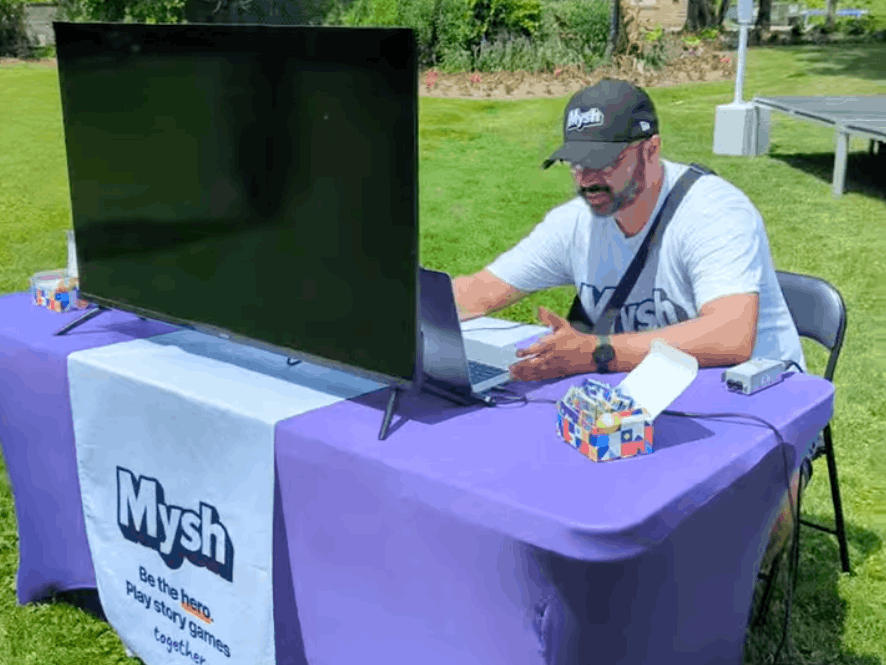
    We rolled in to a celebration already in full swing: families spread across the grass, food lines forming, kids darting between activities with the particular energy of a day off school, and a sun that meant business. The thermometer crept toward 40°C, the kind of heat that makes you rethink every plan you showed up with. So we rethought ours.

    A stage on the move

    Here’s something they don’t tell you about bringing a live storytelling show to an outdoor festival: half the job is logistics, and the other half is reading the room — or, in this case, reading the sky.

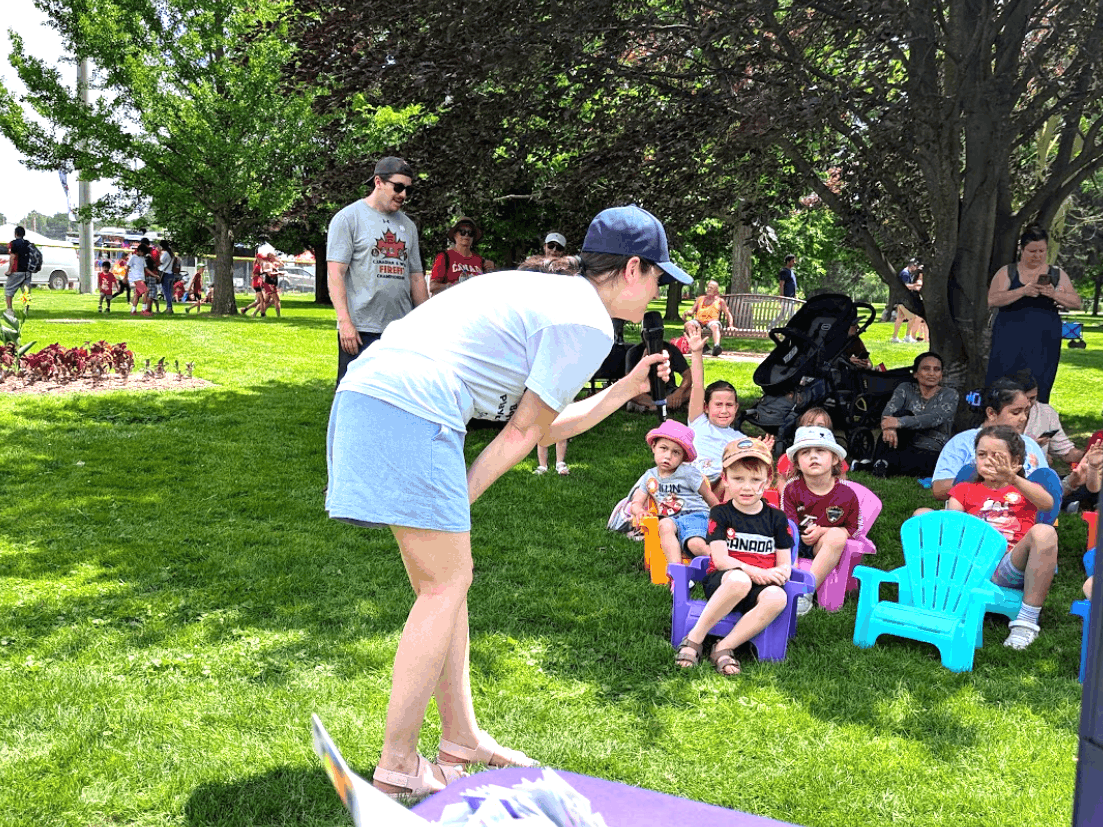
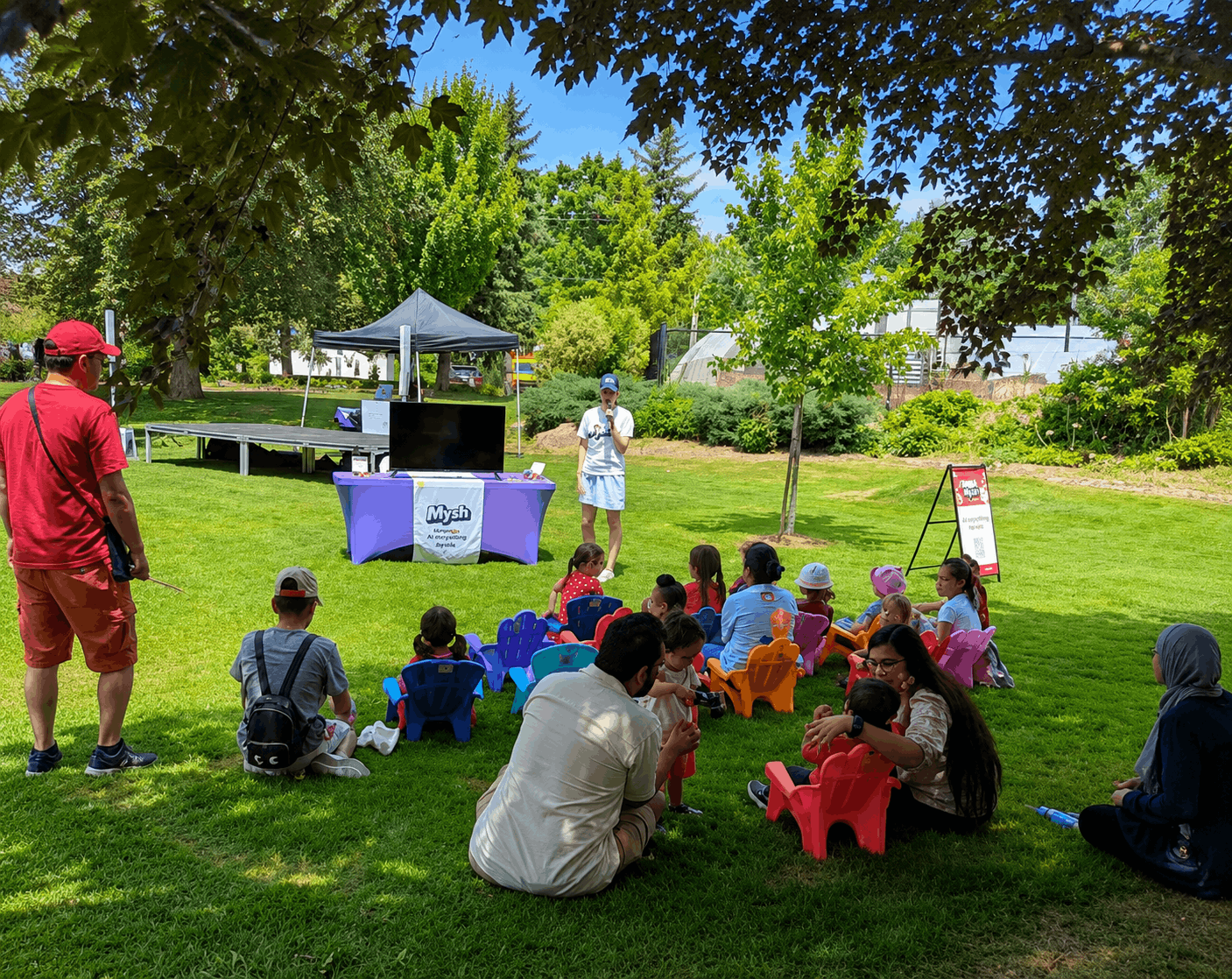
    Lauren took one look at our stage baking in the open and made the call of the day: she moved the whole thing — big speakers, mic, and setup — into the shade of a tree nearby. It sounds simple. It was not. Anyone who has hauled festival gear across a lawn in near-40-degree heat knows exactly how not-simple it is. But it meant the kids who gathered around us spent the next hour in the cool instead of the glare, and that patch of shade quietly became part of the show, our own little storytelling grove for the afternoon.

    How Canada Tree got his branch arms

    With the speakers up and a single microphone passed from hand to small hand, we did what Mysh does best: we built stories out loud, together, in real time.

    If you’ve never seen it happen, here’s the shape of it. We start a story, then we stop and hand the moment to the crowd. What happens next? Who’s the hero? What are they afraid of? And instead of the shy silence you might expect from a group of kids in front of a microphone, you get a flood — ideas tumbling over each other, each one bolder than the last. The kids weren’t watching a story happen to them. They were writing it.

    That’s how Canada Tree was born.

    One of our storytellers leaned into the mic and introduced a superhero with muscular branch arms who rescues people trapped in mazes. Canada Tree. Invented on the spot, fully formed, gloriously specific — muscular branch arms, mind you, not just any arms — and beloved by everyone within earshot before he’d even had his first adventure. We couldn’t have written a better character if we’d tried, which is sort of the whole point. The best ideas were never ours to begin with. They were already out there in the crowd, waiting for a microphone.

    Authors, not audience

    We shared the afternoon with some stiff competition. An exotic animal show ran nearby. A Spider-Man made an appearance. On paper, a browser-based storytelling game isn’t the flashiest act at a summer festival, no reptiles, no web-slinging, no costume.

    But something kept the kids at our tree, and we think we know what it was. At most shows, kids are the audience. They watch the animals, they cheer for the superhero, they clap when it’s over, and then they move on to the next thing. With Mysh, they’re the authors. The story doesn’t exist until they build it, and it goes exactly where their imaginations take it — mazes, branch-armed heroes, and all. That shift, from watching to making, is the whole reason Mysh exists, and it’s a different kind of magic to witness in person. Quieter than a Spider-Man entrance, maybe. But it sticks.

    One more story

    You could hear it in the moment we wrapped up. Before we’d even caught our breath, a small voice asked the question every storyteller dreams of hearing:

    “Can we play another story?”

    That’s the line we carried home from Cambridge. Not the heat, not the logistics, not the show next door, just a kid who wasn’t ready for the story to end. It’s the same feeling we’re chasing every time a family opens Mysh at home: one more chapter, one more character, one more and then what happens?

    Thank you, Cambridge, for the shade, the ideas, and Canada Tree. We had as much fun as the kids did, and we’ll be back.

  • Imagine in the Park: How Mysh Took Over Hamilton for a Weekend

    Imagine in the Park: How Mysh Took Over Hamilton for a Weekend

    There’s something special about watching a kid’s imagination take over completely, the kind of focus where the rest of the world just disappears. That’s exactly what happened on June 6th in Hamilton, where Mysh set up shop in the park and let hundreds of kids loose with their imaginations.

    A Weekend Built on Imagination

    Imagine in the Park wasn’t just another pop up event. It was two days of storytelling, adventure, and pure creative chaos in the best possible way. Kids didn’t just show up and play, they built. They invented characters, dreamed up backstories, and stepped into a world that was as much theirs as it was ours.

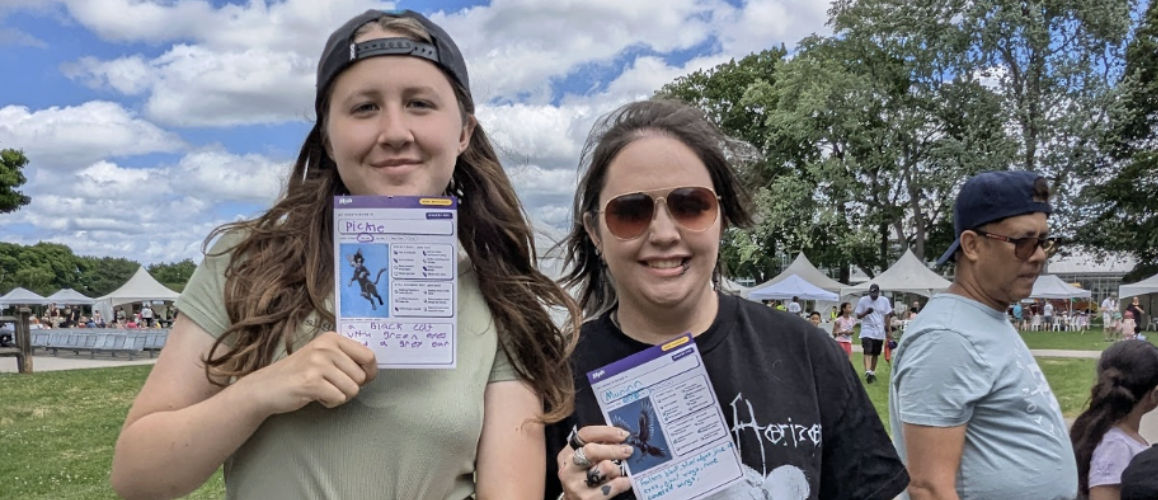
    By the time the weekend wrapped, over 100 unique characters had been created by the kids who came through. Each one was different, each one came with its own story, and honestly, some of the creativity on display would put a lot of adults to shame.

    The Numbers Tell Part of the Story

    We always love seeing the energy in person, but the numbers backed it up too. Play sessions were up 26% compared to what we’d normally expect, which says a lot about how much these kids didn’t want to stop once they got going.

    And then there was the one kid who really set the bar. After the event, he went home and kept playing the game for over two hours straight. That’s the kind of reaction every event organizer hopes for but rarely gets to witness so clearly.

    Wind, Weather, and a Whole Lot of Heart

    Not everything about the weekend was smooth sailing. Strong winds rolled through at points and tried their best to shut things down, but they didn’t stand a chance against a group of kids who were locked into their adventures. The team adjusted on the fly, the activities kept running, and the fun never really slowed down.

    If anything, the weather just became part of the story. A few extra challenges along the way only added to the sense of adventure, and the young explorers handled it like pros.

    A group of four people posing for a selfie at an outdoor event, with a blue canopy overhead. They are wearing matching caps with the logo 'Mysh'.

    Meeting the Families Who Make It All Worth It

    Beyond the stats and the stories, the best part of the weekend was simply being there with the families who showed up. So many parents and kids stopped by, played, asked questions, and left as part of the Mysh community. Conversations turned into friendships, and quick visits turned into kids who didn’t want to leave.

    Events like this remind us why we do what we do. It’s not just about building a game, it’s about creating moments where kids can dream a little bigger and play a little longer.

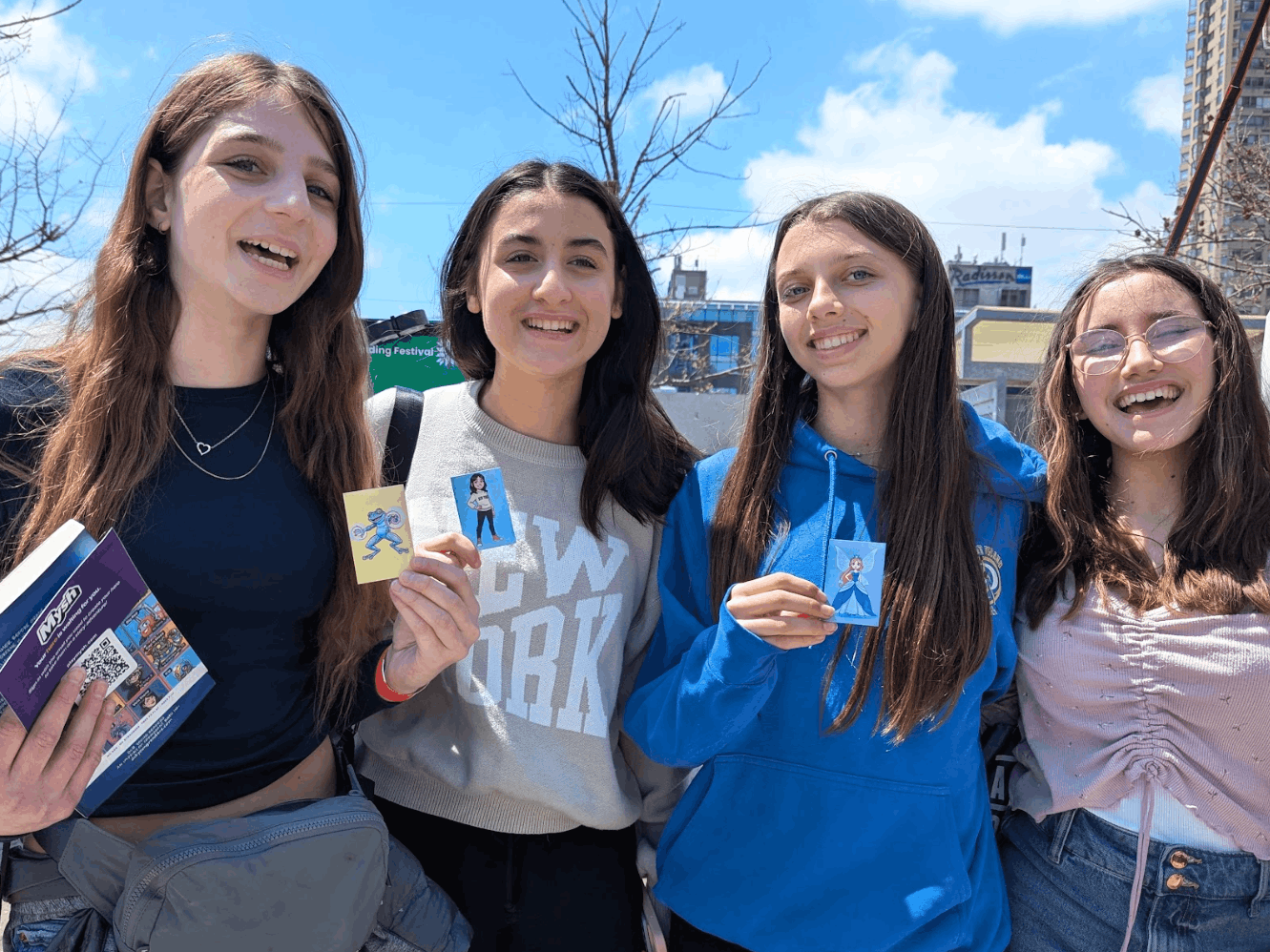
    A girl holding a character card with the name 'Elena' while smiling, with a woman beside her and other children in the background. The scene is set outdoors on a sunny day.

    Until Next Time, Hamilton

    To everyone who came out, played with us, and brought their imagination along for the ride, thank you. Hamilton showed up in a big way, and it’s weekends like this that remind us the Mysh universe is only as good as the kids who bring it to life.

    We can’t wait to do it again.

  • 400 Stories in One Weekend — Mysh at Toronto’s Forest of Reading

    400 Stories in One Weekend — Mysh at Toronto’s Forest of Reading

    We did not expect the line.

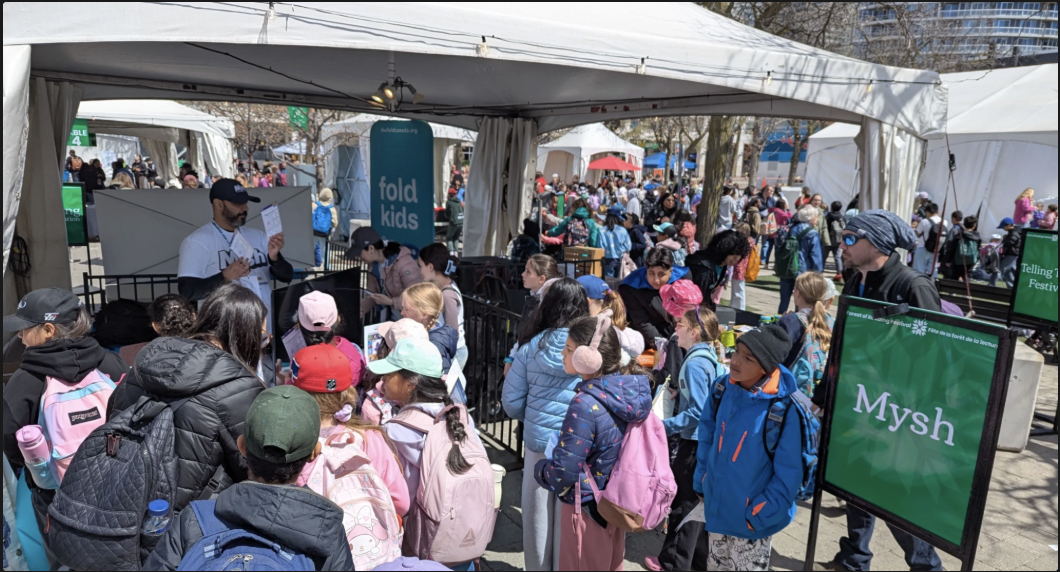
    Kids started gathering around the Mysh station at Toronto Harbourfront and just kept coming. Some waited half an hour. Not to ride something or win a prize. Just to get a turn to tell a story.

    That was the moment we knew something real was happening.

    How it started

    The Forest of Reading is one of the biggest literacy events in Canada, run by the Ontario Library Association every year. Thousands of young readers come through over the course of the event, and this year we were there with a quiet little secret.

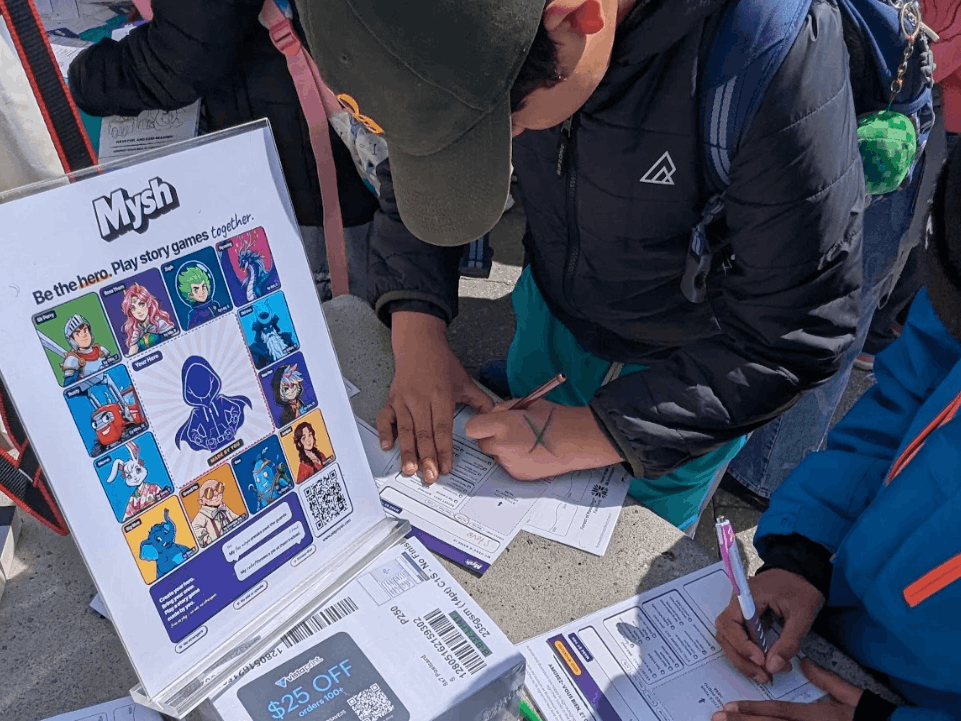
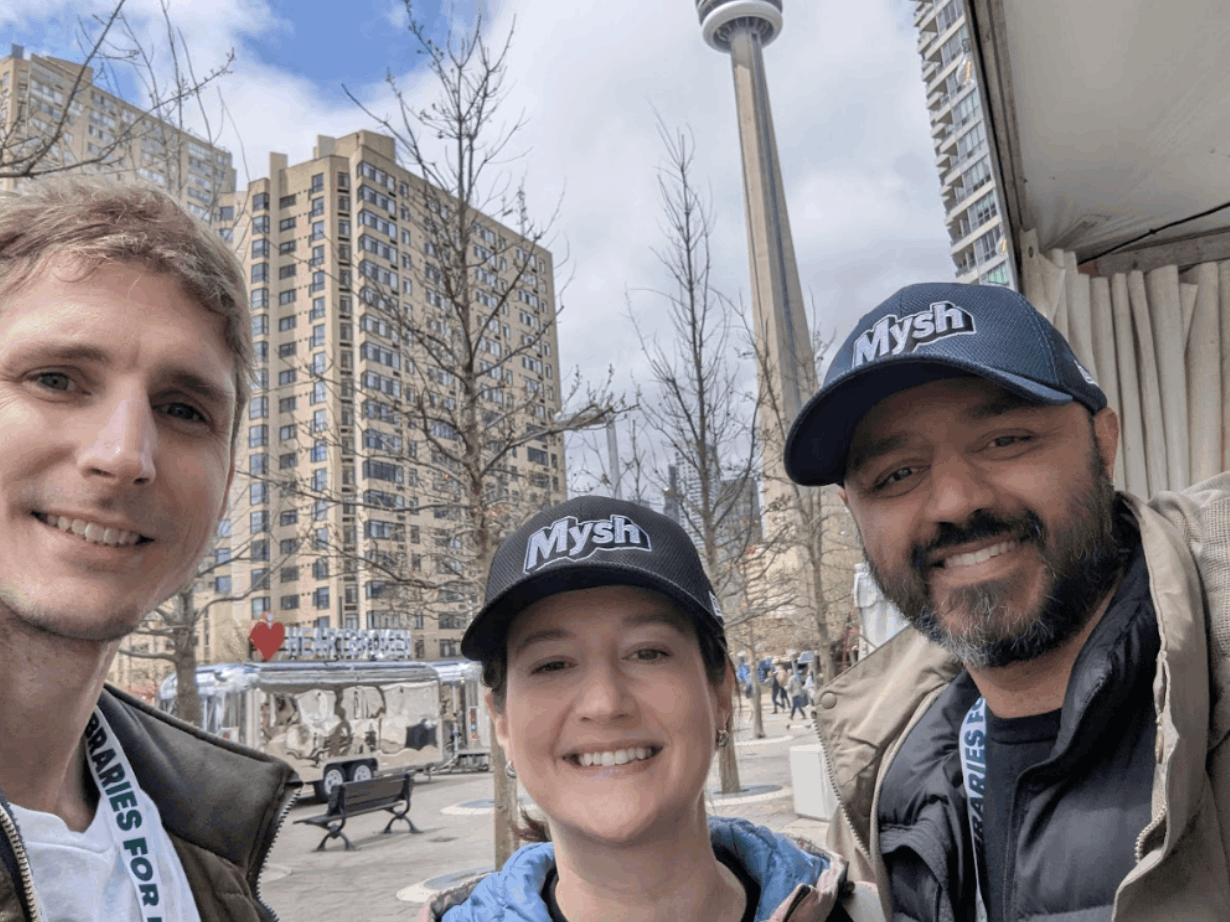
    Founders Neil Vidyarthai and Lauren Dugan, with Brandon Corrigan, set up at Harbourfront with a very simple offer: come build a character, make a hero, and see where the story goes. We were showing something we had been building for a long time but had not yet released. A sneak peek for kids who had never heard of us.

    We had no idea what to expect. We got 400 stories.

    “The future should belong to the boundless imagination of kids. I have always believed every one of us has a great story. I saw it that day.” – Neil Vidyarthi, CEO of Mysh


    The kids who waited


    The line formed on its own. Kids saw what other kids were doing and wanted in. They watched characters appear on screen and stories take shape, and they got curious. So they waited.

    What they were waiting for was a chance to make something that was entirely theirs. A hero with a name they picked. A pet only they could dream up. A story that had never existed before and never would again in quite the same way.

    By the end of the weekend, over 400 completely original stories had been built. Four hundred characters, worlds, and adventures created by kids, in minutes, at a reading festival in Toronto.

    “They whipped together such wild, hilarious, moving, personal stories. The power of a kid’s imagination with the right tools is something else entirely.”


    The part we did not see coming


    The stories were incredible. Magical worlds, ridiculous powers, sidekicks that made no sense and were perfect because of it. Adventures that started serious and turned absurd and then somehow became personal.

    But the thing that genuinely got to us was what happened between the kids.

    Children who had never met were leaning over to look at each other’s screens. They were cheering for each other’s characters, building on each other’s ideas, making suggestions, getting excited when someone’s hero came together just right. Strangers became friends over a shared story in about four minutes.

    We build Mysh because we believe in what kids can create when you give them the right space to do it. Watching that play out in real time, between real kids, at a literacy event on a sunny day in Toronto, was something none of us will forget quickly.

    “The very special part was how encouraging and connected the children became with each other, supporting each other’s creations, building upon them, making new friends.”


    What we took away from it

    The Forest of Reading showed us something we had hoped was true but needed to see. Kids do not need to be passive. They do not need to be entertained by something someone else made. Given the space and the tools, they will create things that surprise the adults standing right next to them.

    Most of what children interact with on screens is built for consumption. Watch this, react to this, follow this. Mysh is built around the opposite idea. Imagine this, decide this, write this. The difference in what it produces in kids is visible almost immediately, and we saw it play out across two full days at Harbourfront.

    We are grateful to the Ontario Library Association and the Centre for Social Innovation for having us. And we are grateful to every kid who waited in that line, made a character, and showed us what they were capable of.

    What comes next

    Mysh is out now, and moments like this are exactly why we keep showing up in person. These were kids with no familiarity with the brand and no reason to be generous with us. They just saw something, got curious, waited, and created something they were proud of.

    We want more of that. So we will keep bringing Mysh to events, libraries, and classrooms, not just online, because watching a kid build their first character in person is still the best way we know to show people what this is.

    If you give kids the chance to create, they will surprise you every time.